

The Railroad Bridge Howe Truss Replacement Project
Bridging Our Past and Future
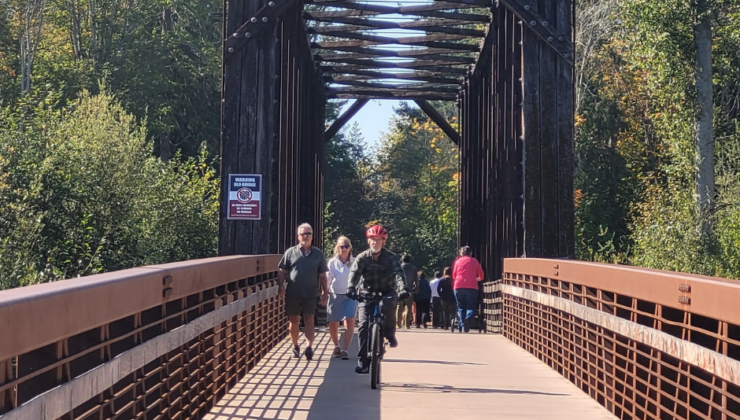
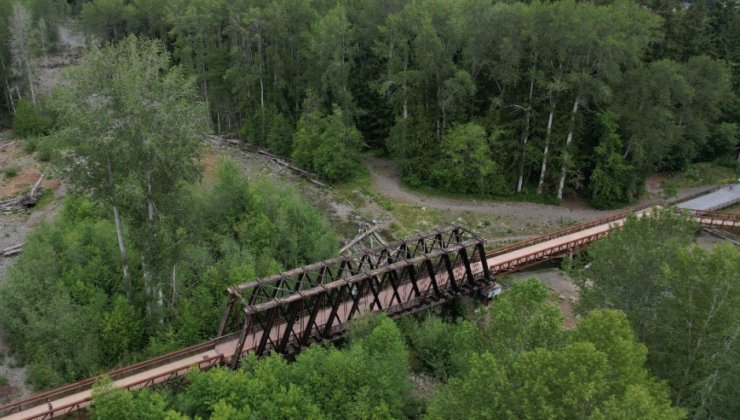
For decades, Railroad Bridge has connected people to the Dungeness River, Railroad Bridge Park, and the Olympic Discovery Trail. Today, annual inspections confirm that deterioration of the historic wooden Howe Truss has reached a point where replacement is necessary to ensure the bridge remains safe and accessible for all who use it.
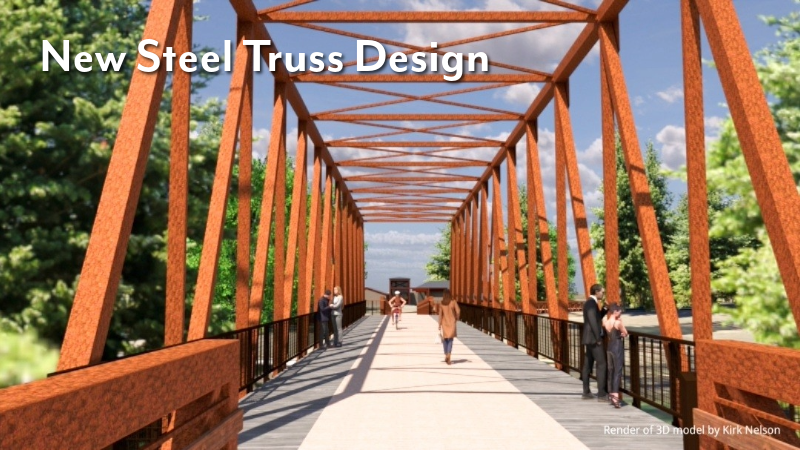
After extensive evaluation, the Jamestown S’Klallam Tribe, Dungeness River Nature Center Board of Directors, and Peninsula Trails Coalition determined that replacing the truss with a steel replica is the most responsible long-term solution. Construction is planned for summer 2027.
This project will only be possible through the generosity of community members committed to preserving the safety, accessibility, and legacy of Railroad Bridge Park. The estimated cost to replace the bridge is approximately $3.5 million. We’re hoping to raise $1 million of those funds through donations. Donations can be made online or at the Dungeness River Nature Center. Your gift will help sustain a local landmark, protect the Dungeness River, and ensure future generations can safely enjoy Railroad Bridge Park.
At a Glance: Replace vs. Repair
| Replace | Repair |
|---|---|
| Costs around $3.5 million | Costs $10+ million over 20+ years |
| One trail closure for ~3 months | Repeated closures over time |
| Removes toxic creosote-treated timber | Toxic creosote-treated timber remains |
| Protects fish habitat | Habitat impacts continue |
| Lower long-term costs | Higher long-term costs |
| Minimal future trail and habitat disruptions | Regular trail and habitat disruptions |
| Long-term solution | Continual repairs needed |
“The Railroad Bridge is a beloved part of our local and Tribal community, but for public safety reasons, it needs to be replaced,” said W. Ron Allen, Jamestown S’Klallam Tribe Chairman and CEO. “We plan to honor its historical significance with a new structure that reflects the current design and keeps park and trail users safe for future generations.”
Help Build the Next Chapter
The bridge you know and love can continue serving our community for generations to come—with the support of people like you. The success of this project relies on people who believe in honoring local history, protecting natural resources, and ensuring that Railroad Bridge remains a welcoming gateway for everyone who visits Railroad Bridge Park.
Every gift—large or small—moves us closer to making this vision a reality. Together, we can honor the past while creating a safer, stronger future for our community and the Dungeness River.
Frequently Asked Questions
What’s happening with the bridge?
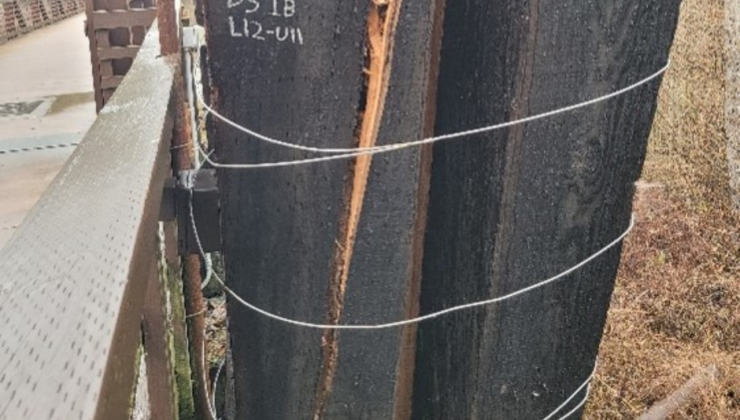
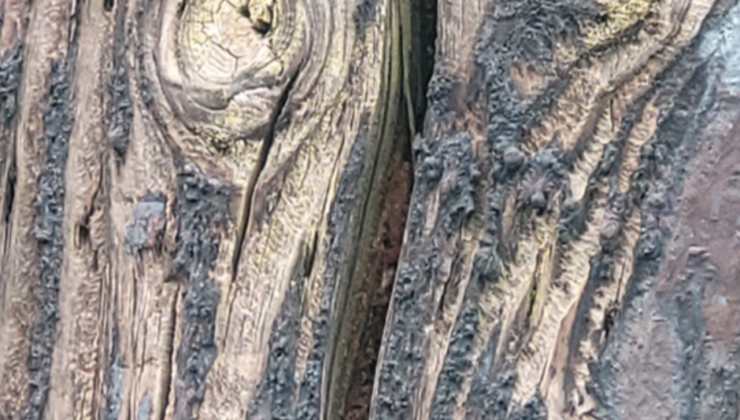
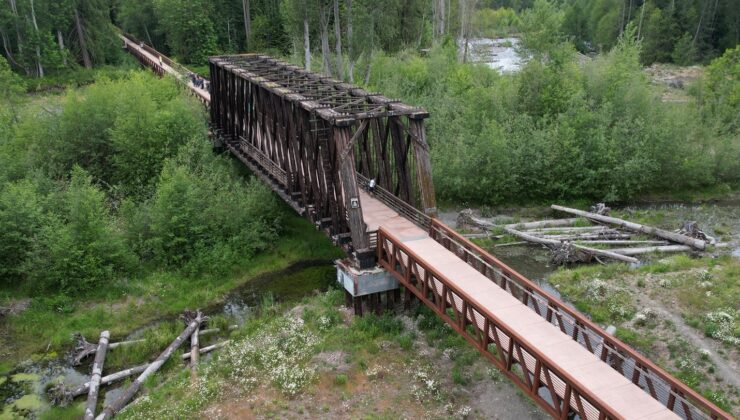
As revealed in inspections since 2022, several timber truss diagonals on the 156-foot-long, 23-foot-wide Howe Truss have been deteriorating. An April 2025 report by Fickett Structural Solutions, Inc., found that while most bridge components are in good to fair condition, 13 of the 34 primary load carrying diagonals had “pockets of decay large enough to impact structural capacity.”
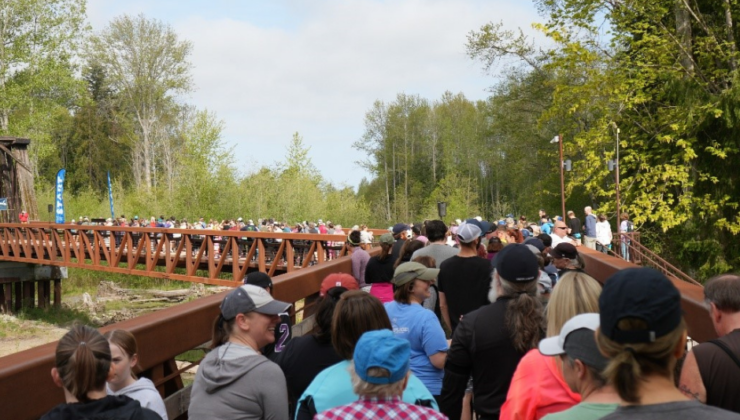
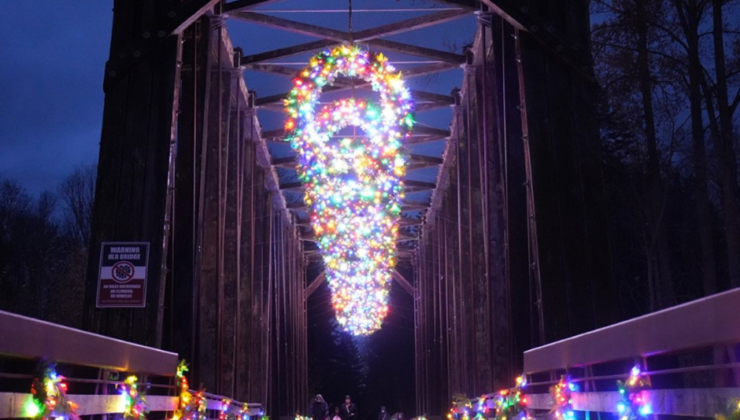
To minimize the chance of structural bridge damage and prolong the truss life while we work to rebuild, the Tribe posted signs for no mass gatherings, reducing the maximum load to 100 persons. The changes did restrict some events (Dine on the Dungeness, Run the Peninsula’s Railroad Bridge Run).
Is the bridge safe to use?
Yes, for pedestrians and bicyclists only; No vehicles of any kind are allowed. However, staff have limited gatherings on the truss section of the Railroad Bridge, as indicated by signs on and near the bridge.
When will the trail be closed?
The construction timeline is still dependent on funding, with a tentative goal of summer, July 1 to September 30, 2027.
Why close the bridge/truss for replacement during the summer?
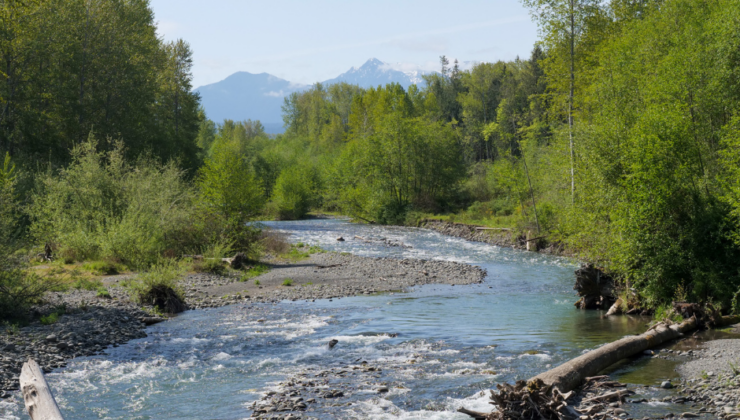
Mainly for the salmon, this is a short 3-month window to conduct work below the ordinary high mean mark of the river. Construction of the new steel truss will be done off site on tribal land. The contractors need water levels at their lowest for safety purposes and to avoid “in-water” work. Project organizers seek to minimize the adverse potential for safety issues (such as a flood) with large equipment and staff in the area. Some revegetation will be required. This type of work will be carried out in the Fall after the bridge has re-opened.
How can I access the Olympic Discovery Trail? Is there a detour?
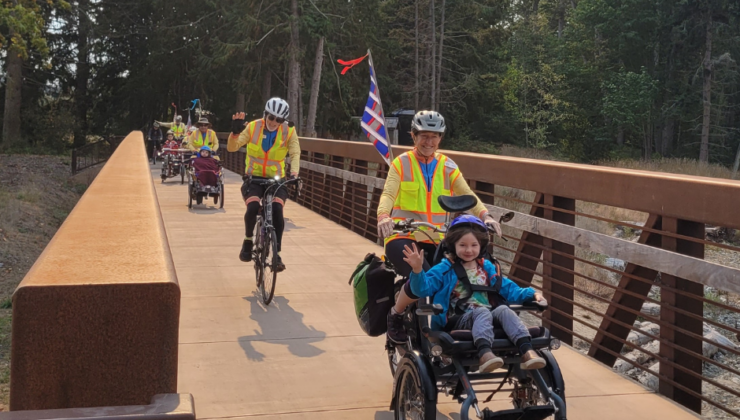
In 2022, Olympic Discovery Trail users were able to use an unmarked detour that made use of Kendall Road, Old Olympic Highway, Heath Road, and E. Runnion Road. The county has planned construction project on Heath Road in 2027. The county will decide how Heath or another road will be useful for a bicycle detour.
Will the truss replacement affect Dungeness River restoration work in the area?
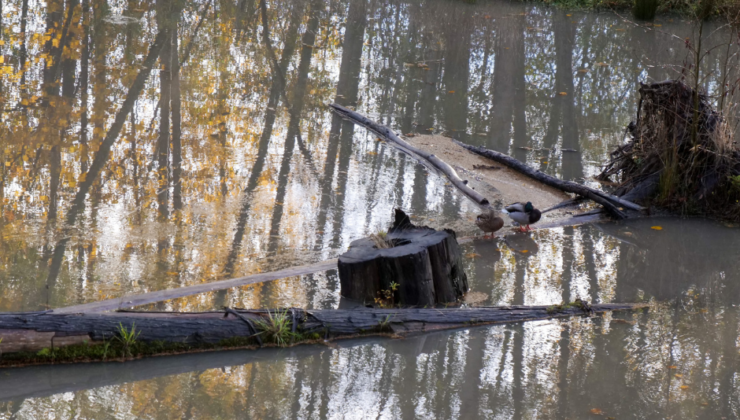
No adverse impact is expected to the recent restoration work.
What will the new truss look like?
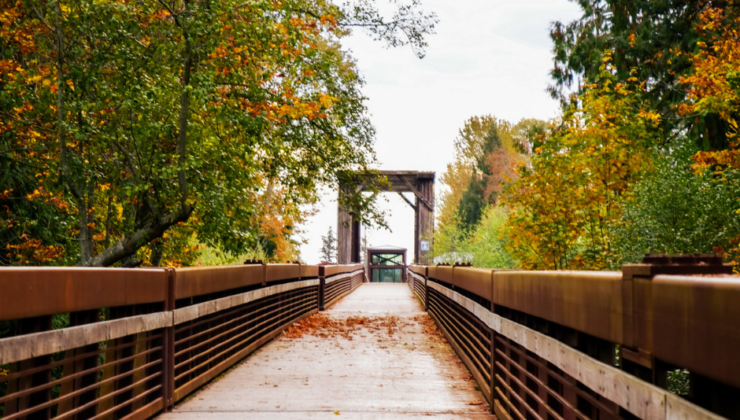
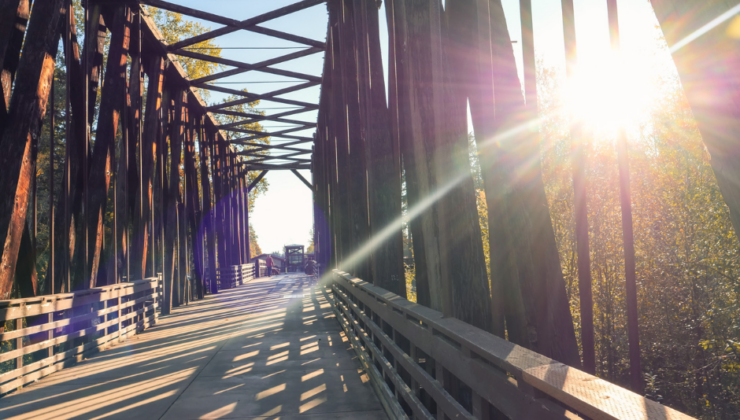
Staff with the Jamestown S’Klallam Tribe are designing the new structure to preserve the Howe Truss in aesthetics, with tall, steel beams and diagonals echo the historic truss. The new design is slightly wider, allowing more space for pedestrian and non-motorized vehicle crossings on the Olympic Discovery Trail.
How much will it cost? And why replace rather than repair the truss?
The engineer’s initial estimate for truss/bridge construction and replacement is about $3.1 million, with a more recent estimate closer to $3.5M due to the rising cost of steel. The project would close the Olympic Discovery Trail for up to 3 months. The engineer’s estimate for repairing the Howe Truss and maintaining the deteriorating wood could cost upwards of $10 million over the next 20 years and would involve more frequent closures of the bridge.
Maintenance and rehabilitation of the wooden bridge would exhaust resources and lead to regular, prolonged closures.
Replacing the structure is also an opportunity to take out creosote-treated timber from the site. Creosote is a toxic preservative product used against termites, fungi, mites and other pests, poses risks to fish and invertebrates.
Were other options considered?
The Jamestown S’Klallam Tribe considered three options: a reduced version of the current truss that allows for minimal passage, a near-replication of the Howe Truss, and a balance between the first two options. The Tribal Council, staff and engineers support the largest version, one that keeps intact the character of the truss while improving safety for its users.
How often is the bridge inspected?
The bridge is inspected by a structural engineer annually, or more frequently as determined by events and observed deterioration. (The next inspection is scheduled for February 2026.)
What will happen to the pieces of the bridge after it’s removed?
The project contractor will dispose of the creosote-treated timbers. Tribe staff have not yet identified what will happen with other pieces of the historic truss.
How often is the bridge used?
In 2023, the most recent year the River Center’s Eco-counter was in use for an entire year, there were 334,000 recorded bridge crossings. In 2025, with the counter active for nine months, more than 242,000 crossings were recorded.
For more information
Learn more about the Historic Railroad Bridge and Howe Truss at the Dungeness River Nature Center’s website: Dungeness Railroad Bridge
- Jamestown S’Klallam Tribe: jamestowntribe.org
- Dungeness River Nature Center: dungenessrivercenter.org
- Peninsula Trails Coalition: olympicdiscoverytrail.org
Donate to the Bridge Replacement Project