

Project FeederWatch—Thank You, Doris!
For the past four seasons, Doris has conducted surveys at the River Center for Project FeederWatch, a citizen science program run by the Cornell Lab of Ornithology. From 2022-2023 through 2025-2026, 77 bird counts were completed and 34 species were recorded at the rain garden feeders, contributing valuable data used by scientists to track bird populations, migration patterns, and health across North America.
 Doris recently shared a reflection and photos from her time monitoring birds in the River Center’s rain garden:
“Have you enjoyed the antics of the birds at the feeders in the rain garden? Do they cause you to smile and wonder what their chatter means? Whether you are outside on the patio or inside the observation room, the birds are actively communicating and feeding.
If an illness is detected in a specific species, participants are alerted to watch for and report signs of illness in their birds. You may have noticed that feeders are occasionally removed from the rain garden. When illness is observed among the birds, the feeders are removed and cleaned to help prevent the spread of disease. They are usually replaced within a week.
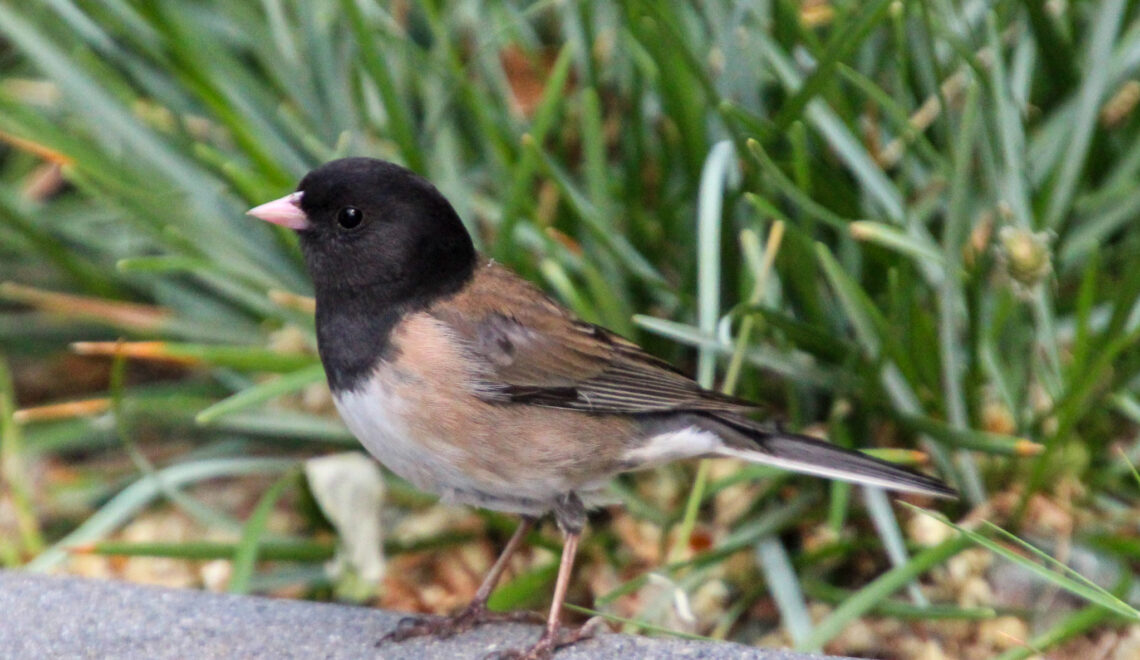
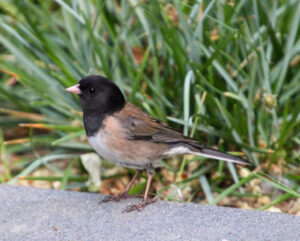
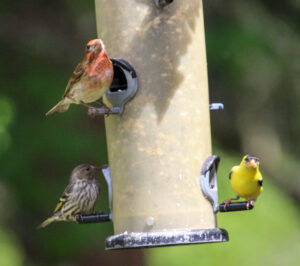 Year-round you may see Black-capped and Chestnut-backed Chickadees, Red-breasted Nuthatches, Dark-eyed Juncos, House Finches, Spotted Towhees, Anna’s Hummingbirds, Downey and Hairy Woodpeckers, Song Sparrows, Bushtits, Purple Finches, and Pine Siskins.
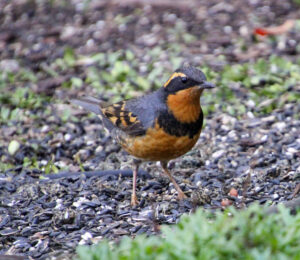
Seasonally you may see White-crowned and Gold-crowned Sparrows, Ruby-crowned and Gold-crowned Kinglets, Townsend Warbler, Varied Thrush, American Robin, California Quail, Mourning Dove, Evening Grosbeak, and Tree and Violet-green Swallows.
A Cooper’s Hawk or Sharp-shinned Hawk have been seen flying through looking for a quick meal. Eagles fly over the bridge or river and sometimes sit in a tree near the feeders.
While observing the birds you have often seen Douglas squirrels darting among the feeders and climbing the poles. Baffles have been installed on the poles to prevent the squirrels from eating all the seed. They still feed from the seed dropped to the ground.
 While you are resting, having a snack or coffee, enjoy the beautiful natural plants and the birds in the rain garden.”
We extend our heartfelt thanks to Doris for the many hours she devoted to observing and documenting birds at the River Center. Her dedication has contributed valuable data and connected our local community to a larger scientific research effort.
Interested in continuing this important work? We are looking for a volunteer to take part in Project FeederWatch this November-April. It’s a rewarding opportunity to contribute to bird research while enjoying some of the River Center’s most popular wildlife visitors.
For more information about volunteering, please send an email to Leshell at [email protected].
Photos provided by Doris Causey:
- Varied Thrush
- Three Different Finches
- Dark-eyed Junco